






- 주문상품수량
- 개
- 예상적립금
P - 상품할인금
- 원
- 배송료
- 원
- 주문합계
- 원
네비게이션 실시간 인기 책
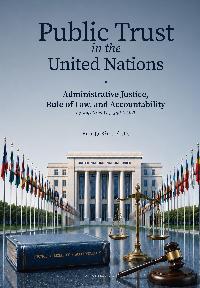
Public Trust in the United Nations Administrative Justice, Rule of Law, and Accountability - Lessons from ITU and ILOAT-
- Eun-Ju Kim 저
- aSSIST University Press
- 2026년 08월 31일
-
정가45,000원
-
판매가40,500원 [10% 할인]
-
결제 혜택무이자
카드할인/포인트결제 안내
제휴카드
반디앤루니스 롯데카드 결제금액 최대 25% 청구할인 (1만원 이상 결제건에 한해 월 2회, 건당 최대 1만원 할인) 반디앤루니스 우리V카드 결제금액 10% 청구할인 포인트결제
OK캐쉬백 포인트 최소 10원부터 전액 사용 or 1% 적립 현대카드 M포인트 결제금액의 최대 10% 사용 가능 신한카드 포인트 결제금액의 최대 10% 사용 가능(일부카드) 하나(구.외환) 포인트 보유 한도 내에서 100% 사용 가능 씨티카드 포인트 결제금액의 최대 50% 사용 가능 할인카드
NH농협 TAKE5카드 20% 청구할인(Edu Pack) 채움 플래티늄 멀티카드 20% 청구할인 모바일 Tmoney 신한카드 10% 청구할인 신한카드 Shopping 10% 청구할인 NH농협 체크카드 10% 청구할인 NH20 해봄 신용카드 10% 청구할인 씨티 클리어 카드 7% 청구할인 NH20 해봄 체크카드 5% 청구할인 NH농협 LADY다솜카드 5% 청구할인 신한카드 큐브 5% 청구할인 신한카드 큐브 PLATINUM# 5% 청구할인 
무이자 안내
-
적립금2,250원 적립 [5%P]
추가 적립금 안내
[2천원 추가 적립]
총 주문금액 5만원 이상 구매 시 2,000원 추가 적립
도서(eBook포함)만 구매 시 적립 대상에서 제외업채배송상품 포함(기프트, 업체배송 등) 5만원[멤버십 추가 적립]
슈퍼루니 : 3% 추가 적립
골드루니 : 2% 추가 적립
실버루니 : 1% 추가 적립
단, 국내도서, eBook만 구매 시 적립 불가
-
배송료무료배송
-
출고예정일
출고예정일 안내
※ 출고예정일은 도서 재고상황에 따라 변동될 수 있습니다.
2026년 11월 26일(목)※ 출고예정일은 도서 재고상황에 따라 변동될 수 있습니다.
당일배송 가능지역 검색
“도로명주소”를 쉽게 찾아보세요
1. 도로명으로 검색하기 (예, “직지길” or “직지길+322”)
2. 건물명으로 검색하기 (예, “반디앤루니스빌딩”)
3. 동(읍/면/리) 으로 검색 (예, “인사동” or “인사동+43”)
4. 도로명주소를 모르실 경우 도로명주소 안내시스템(http://www.juso.go.kr)에서 확인해주세요.
시/도
시/군/구
회원리뷰
ISBN: 9791162821619
488쪽
170 x 245 (㎜)
책 소개
이 책은
〈영문 도서 소개〉
Public Trust in the United Nations
Administrative Justice, Rule of Law, and Accountability — Lessons from ITU and ILOAT
At a time of war, geopolitical reordering and declining confidence in multilateral institutions,
can the United Nations survive without regaining public trust?
This question is especially urgent as Member States select the next UN Secretary-General and other executive heads across the UN system.
The United Nations was created on the promise that international cooperation can serve humanity through shared principles, lawful institutions, and accountable public authority. Yet public trust in international organizations ultimately depends not on the values they proclaim, but on whether those values are consistently reflected in their own decisions, conduct, and governance.
Public Trust in the United Nations examines this question through the lens of administrative justice, the rule of law, and institutional accountability. Drawing particularly on experiences within the International Telecommunication Union (ITU) and the jurisprudence of the International Labour Organization Administrative Tribunal (ILOAT), the book explores what happens when organizational rules, internal oversight, decision-making authority, and external judicial review intersect.
Rather than treating individual judgments as isolated legal disputes, the book places them within a wider governance framework. It considers how procedural safeguards, duties to independently investigate equally at every level, transparency, corrective action, oversight, and the relationship between authority and responsibility affect institutional legitimacy. It also asks a forward-looking question: how can international organizations learn from adverse judgments and internal failures so that similar problems are not repeated?
The book is not intended only for United Nations officials or legal specialists. For the sake of future generations who will lead the AI era, it calls on Member States, scholars, students, policymakers, civil servants, industry, civil society, the media, and the wider public to understand and engage with the international organizations created—and continually evolving—to serve them, and to participate in reforming those organizations so that they live up to the standards they publicly proclaim.
At a time when artificial intelligence, changing global order, and declining confidence in public institutions are reshaping global governance, this book advocates that the future credibility of the United Nations system will depend on more than new policies and declarations. It will depend on whether institutions apply their rules fairly, correct unlawful action, protect public resources, and ensure that those who exercise authority are also held responsible for its use.
The future of the UN depends not only on whom it selects to lead, but also on whether its governance can earn and retain the trust of nations and their peoples.
〈한글 도서 소개〉
유엔에 대한 공공의 신뢰
행정 정의, 법의 지배와 책임성 — ITU와 ILOAT의 교훈
전쟁과 국제질서의 재편, 다자기구에 대한 신뢰 하락의 시대에
유엔은 공공의 신뢰를 되찾지 않고 존립할 수 있을까?
차기 유엔 사무총장과 유엔 체제의 주요 집행수장들을 선출하는 시점에서 이 질문은 더욱 절실하다.
유엔은 공동의 원칙과 법에 기초한 제도, 그리고 책임 있는 공적 권한을 통해 국제협력이 인류에 기여할 수 있다는 약속 위에 세워졌다. 그러나 국제기구에 대한 공공신뢰는 그 조직이 어떤 가치를 선언하느냐보다, 그 가치가 조직 내부의 의사결정과 행정에서 실제로 얼마나 일관되게 구현되는가에 달려 있다.
《유엔에 대한 공공의 신뢰》는 행정 정의, 법의 지배와 제도적 책임성이라는 관점에서 이 질문을 고찰한다. 특히 국제전기통신연합(ITU)에서의 경험과 ILO 행정재판소(ILOAT)의 판례를 바탕으로, 조직의 규칙, 내부 감사와 검증, 의사결정 권한, 그리고 외부의 독립적인 사법심사가 서로 교차할 때 어떠한 문제가 발생하고 어떻게 해결되어야 하는지를 분석한다.
이 책은 개별 판결을 단순한 법적 분쟁으로 보지 않는다. 절차적 권리, 조사 의무, 투명성, 시정조치, 감독기능, 그리고 권한과 책임의 관계가 국제기구의 정당성과 신뢰에 어떠한 영향을 미치는지를 보다 넓은 거버넌스의 틀에서 살펴본다. 또한 불리한 판결이나 내부통제의 실패가 반복되지 않도록 국제기구가 어떻게 조직적으로 학습하고 개선할 수 있는지 질문한다.
이 책은 유엔 관계자나 법률 전문가만을 위한 책이 아니다. AI 시대를 이끌 미래세대를 위해 회원국, 학자, 학생, 정책입안자, 공무원, 산업계, 시민사회, 언론과 일반 시민 모두가 자신들을 위해 설립되고 지속적으로 발전해 온 국제기구를 이해하고 이에 적극적으로 참여하며, 그 기구들이 스스로 표방하는 기준에 부합하도록 개혁하는 데 동참할 것을 촉구한다.
인공지능의 급속한 발전, 지정학적 변화, 공공기관에 대한 신뢰 약화가 글로벌 거버넌스의 환경을 바꾸고 있는 오늘날, 유엔에 대한 신뢰성은 새로운 정책이나 선언만으로 확보될 수 없다. 규칙을 공정하게 적용하고, 위법하거나 잘못된 결정을 신속히 바로잡으며, 공적 자원을 보호하고, 권한을 행사하는 사람에게 그에 상응하는 책임을 묻는 제도와 실천이 뒷받침될 때 공공신뢰는 비로소 회복될 수 있다.
유엔의 미래는 누구를 지도자로 선출하는가뿐 아니라,
유엔의 거버넌스가 국가와 국민의 신뢰를 얻고 유지할 수 있는가에 달려 있다.
저자 소개
<영문 저자 소개>
International ICT, AI, Digital Policy & Diplomacy Expert
Chair Professor, aSSIST University, Republic of Korea
Dr. Eun-Ju Kim is an international expert in ICT, artificial intelli- gence (AI), digital policy, and diplomacy, with nearly four decades of experience across the United Nations system, the public and pri- vate sectors, research, and academia.
From 2000 to 2025, she held senior leadership positions at the International Telecommunication Union (ITU), contributing to in- ternational cooperation, digital development, and institutional trans- formation. She is currently Chair Professor at aSSIST University in the Republic of Korea.
She holds an M.A. from Seoul National University and an M.A. and Ph.D. from the University of London, where her research fo- cused on the UN system, including ITU and UNESCO.
Executive education at Harvard Kennedy School, the University of Oxford, and the UN Knowledge Centre for Leadership and Management further informs her work in leadership, management, development, and data science.
<한글 저자 소개>
국제 ICT·AI·디지털 정책 및 외교 전문가
서울과학종합대학원대학교(aSSIST University) 석좌교수
김은주 박사(호: 선덕화 禪德和)는 국제 ICT, 인공지능(AI), 디지털 정책 및 외교 분야의 전문가로, 약 40년에 걸쳐 유엔 체계, 공공·민간 부문, 연 구기관 및 학계에서 폭넓은 경험을 쌓아왔다.
2000년부터 2025년까지 유엔 전문기구인 국제전기통신연합(ITU)에서 고위 리더십 직책을 맡아 국제협력, 디지털 발전 및 제도 혁신에 기여하 였다. 현재는 서울과학종합대학원대학교 석좌교수로 재직하며 교육, 연 구 및 저술 활동을 이어가고 있다.
김 박사는 서울대학교에서 석사학위, 영국 런던대학교에서 유엔 체계, 특히 국제전기통신연합(ITU)과 유네스코(UNESCO)를 연구하여 석사 및 박사학위를 취득하였다.
또한 하버드 케네디스쿨, 옥스퍼드대학교 및 유엔 지식센터에서 리더 십, 조직관리, 개발 및 데이터 과학 분야의 전문 과정을 이수하였다.
목차
TABLE OF CONTENTS
FRONT MATTER
Copyright
Disclaimer
Foreword
Prologue
Acknowledgements
Table of Contents
PART I
Foundations: Public Trust in the United Nations
CHAPTER 1
Introduction: Administrative Justice, Rule of Law, and Accountability
A. The United Nations and the Evolution of Global Governance
B. The Rule of Law and Accountability in International Organizations
C. The ILOAT and the Evolution of Jurisprudence in International Administrative Justice
Table 1.1. Indicative ILOAT Judgment-Volume Profile for Selected High-Volume Organizations (16 July 2026)
Table 1.2. Trends in International Administrative Justice: ILOAT Cases by Decade
Table 1.3. Principal Categories of Administrative Disputes Before the ILOAT
D. The ITU as a Case Study in Governance in the Digital Era
Table 1.4. Evolution of the ITU: From Global Telecommunications to Digital Transformation
Table 1.5. Evolution of ITU-Related Cases before the ILOAT (16 July 2020)
Table 1.6. Changing Nature of ITU-Related Disputes
Table 1.7. Selected Post-2019 ILOAT Judgments Relevant to ITU Governance
E. Objectives, Scope, and Methodology
F. Literature Review and Theoretical Positioning
G. Structure of the Book
PART II
Lessons from ILOAT Jurisprudence: ITU as a Case Study in Administrative Justice, Rule of Law, and Accountability
CHAPTER 2
Administrative Justice and Due Process: Lessons from ILOAT Judgments Nos. 4832 and 5117
A. Case Study I: ILOAT Judgment No. 4832
B. Case Study I: ILOAT Judgment No. 5117
C. Case Study I: Facts of the Case
D. Case Study I: Analysis of the Proceedings and ILOAT Jurisprudence
- Introduction: From Fraud to Administrative Justice
- Methodological Caution: Judicial Findings, Factual Record, and Analytical Inference
- Institutional Governance, Internal Controls, and the Attribution of Responsibility
- Due Process and the Unlawful Additional Layer of Investigation
- Evidence, Serious Misconduct, Gross Negligence, and the Standard of Proof
- Proportionality, Human Dignity, and Consequential Harm
- Advisory Bodies, Executive Authority, and Reasoned Decision-Making
- Judgment Implementation, Remedial Precision, and Judgment No. 5117
- Interconnection with Judgments Nos. 5118, 5213, and 5214
- Accountability, Leadership Responsibility, Financial Stewardship, and Public Trust
- Lessons for International Organizations and Future Generations
- Conclusion: Administrative Justice as Lawful Process, Effective Remedy, and Institutional Learning
Table 2.1. Summary of Core Lessons and Cross-Chapter Connections
CHAPTER 3
The Rule of Law and Investigative Duties: Lessons from ILOAT Judgments Nos. 5118 and 5213
A. Case Study II: ILOAT Judgment No. 5118
B. Case Study II: ILOAT Judgment No. 5213
C. Case Study II: Facts of the Case
D. Case Study II: Analysis of the Proceedings and ILOAT Jurisprudence
- Introduction: From a Harassment Complaint to a Rule-of-Law Failure
- Methodological Caution: Judicial Findings, Allegations, and Analytical Inference
- The Governing Rule: Mandatory Investigation Was Not Optional
- Non-Retroactivity, Regulatory Gaps, and Unequal Procedural Protection in the Over sight Rules
- Repeated Closure, Bifurcation, and Res Judicata
- The Pleaded Pattern and the Need for Cumulative Fact-Finding
- Investigative Asymmetry, Equality Before Internal Law, and Leadership Accountability
- Motive, Institutional Incentives, and Geopolitical Context: Questions, Not Findings
- The ILOAT’s Judicial Role: Judicial Correction, Principled Deference, and Effective Remedy
- Procedural Burden, Institutional Harm, Financial Stewardship, and Public Trust
- Interconnection with Judgments Nos. 4832, 5117, and the Later Chapters
- Lessons for International Organizations, Member States, and Future Generations
- Conclusion: Effective Judicial Protection and Accountability
Table 3.1. Summary of Core Lessons and Cross-Chapter Connections
CHAPTER 4
Accountability and Leadership Responsibility: Lessons from ILOAT Judgment No. 5214
A. Case Study III: ILOAT Judgment No. 5214
B. Case Study III: Facts of the Case
C. Case Study III: Analysis of the Proceedings and ILOAT Jurisprudence
- Introduction: Accountability Beyond the Outcome of a Single Case
- Methodological Caution: Judicial Findings, Documentary Facts, and Analytical Inference
- Judgment No. 5214: Governing Framework, Holdings, and Narrow Legal Effect
- The Judicially Established Context: Judgments Nos. 4832, 5118, and 5213
- The Accountability Threshold: Prima Facie Review and the Manifest-Error Standard
- Apparent Tension among the Judgments and the Temporal Qualification
- Judgments Nos. 4516 and 5214: Two Different Preliminary-Review Frameworks
- Leadership Responsibility, Investigative Asymmetry, and Equal Application of the Rules
- Conflict of Interest, Structural Independence, and the Appearance of Fairness
- Procedural Integrity: Routing, Delay, Disclosure, Decision-Making Authority, and Internal Appeal
- Discrimination, Abuse of Authority, and the Need for Cumulative Analysis
- The ILOAT’s Judicial Role: Deference, Coherence, and Effective Accountability
- Institutional Accountability, Reform, and Member State Oversight
- Lessons for International Organizations, Member States, and Future Generations
- Conclusion: From Administrative Legality to Accountable Governance
Table 4.1. Summary of Core Findings, Analytical Tensions, and Cross-Chapter Lessons
PART III
Toward Governance Reform in the United Nations
CHAPTER 5
Conclusion: Rebuilding Public Trust in the United Nations
Integrated Analysis and Conclusions
A. Rule of Law, Accountability, and Transparency
B. Oversight and Institutional Integrity
C. Member States and Governance Responsibilities
D. Governance Reform in the UN System
1. Strengthen independent, equal, and timely investigation of allegations in accordance with the rule of law
2. Define responsibilities and decision-making authority clearly
3. Mandatory investigative obligations must not be circumvented
4. Strengthen implementation of judgments and oversight recommendations
5. Increase transparency while protecting confidentiality and due process
6. Strengthen financial accountability in exceptional cases
7. Reconsider the adequacy of the international administrative justice framework
8. Strengthen the ILOAT’s role in judicial correction, principled deference, and effective remedy
E. Trust, Legitimacy, and Organizational Credibility
F. Financial Implications, Legal Costs, and Stewardship of Public Resources
Table 5.1. Financial Accountability and Governance Lessons for UN Reform
G. The Future of United Nations Values, Digital Governance, and Institutional Survivability
H. Thirteen Integrated Conclusions for Governance Reform and Future Generations
1. Internal law must bind the institution itself
2. Due process requires timely access to essential evidence
3. Accountability must distinguish systemic failure from individual misconduct
4. The evidentiary threshold must match the procedural stage
5. Mandatory investigations cannot be replaced by procedural substitution
6. Allegations involving elected officials require demonstrable structural independence
7. Cumulative allegations require cumulative fact-finding
8. Internal appeals and ILOAT review must be independent, effective, and neither merely formal nor compromised
9. Judgment implementation is a continuing governance duty
10. Leadership authority and leadership accountability must be aligned
11. Member States are guardians of institutional justice
12. Public resources require transparent financial stewardship and carefully designed recourse
13. Institutional survivability depends on legitimacy, foresight, resilience, and adaptation
Table 5.2. Cross-Chapter Synthesis of the Thirteen Integrated Conclusions
APPENDIX
Selected ILOAT and UN Internal Justice Jurisprudence by Analytical Theme
Table A.1. ILOAT Judgments by Organization, with Approximate Staff (16 July 2026)
Table A.2. Selected ILOAT and UN Internal Justice Jurisprudence by Analytical Theme
Bibliography
A. Books, Articles, Reports, and Press Sources
B. Judicial and Legal Authorities
B.1. Principal ILOAT Judgments Analysed in the Book
B.2. Other ILOAT Judgments Cited, Mentioned, or Considered
B.3. Related UN Internal Justice Jurisprudence
B.4. Comparative National Legal Authorities
C. United Nations Documents, Standards, and Reform Materials
D. ITU Constitutional, Financial, Staff, Ethics, and Investigation Instruments
E. ITU Council, Working Group, and Plenipotentiary Conference Documents
F. Official Databases and Online Sources
List of Acronyms and Abbreviations
Table A.3. Classification of ILOAT Judgments Mentioned or Considered in the Principal Case Studies
Practical Reference for Member States, Staff Members, Students, Scholars, and the Public
Table A.4. Practical Lessons from the Five Principal ILOAT Judgments for Staff Members, Scholars, and the Public
Table A.5. Practical Guide to the ILOAT Statute and Rules, Including the 2026 Amendments
배송 시 유의사항
- 반디앤루니스에서 구매하신 도서는 물류 대행 위탁업체 웅진 북센을 통해 배송됩니다.
(배송 포장에 "웅진 북센"으로 표기될 수 있습니다.)
- 구매한 상품의 품질과 배송 관련 문의는 반디앤루니스로 문의 바랍니다.
- 천재지변 및 택배사의 사정에 따라 배송이 지연될 수 있습니다.
- 결제(입금) 완료 후 출판사 및 유통사의 사정으로 품절 또는 절판 되어 상품 구입이 어려울 수 있습니다. (별도 안내 예정)
- 도서산간지역의 경우 추가 배송비가 발생될 수 있습니다.
반품/교환
상품 설명에 반품/ 교환 관련한 안내가 있는 경우 그 내용을 우선으로 합니다. (업체 사정에 따라 달라질 수 있습니다)
반품/교환
-
반품/교환 반품/교환 방법 홈 > 고객센터 > 자주찾는질문 “반품/교환/환불” 안내 참고 또는 1:1상담게시판 반품/교환 가능 기간 반품,교환은 배송완료 후 7일 이내, 상품의 결함 및 계약내용과 다를 경우 문제발견 후 30일 이내에 신청가능 반품/교환 비용 변심 혹은 구매착오의 경우에만 반송료 고객 부담(별도 지정 택배사 없음) 반품/교환 불가 사유 - 소비자의 책임 사유로 상품 등이 손실 또는 훼손된 경우
- 소비자의 사용, 포장 개봉에 의해 상품 등의 가치가 현저히 감소한 경우
- 복제가 가능한 상품 등의 포장을 훼손한 경우 : 예)만화책, 잡지, 화보집 등
- 시간의 경과에 의해 재판매가 곤란한 정도로 가치가 현저히 감소한 경우
- 전자상거래등에서의 소비자보호에 관한 법률이 정하는 소비자 청약철회 제한 내용에 해당되는 경우
- 해외주문 상품(해외 원서)의 경우(파본/훼손/오발송 상품을 제외)
소비자 피해보상
환불지연에 따른 배상- 상품의 불량에 의한 반품, 교환, A/S, 환불, 품질보증 및 피해보상 등에 관한 사항은
소비자 분쟁해결 기준(공정거래위원회고시)에 준하여 처리됨 - 대금 환불 및 환불지연에 따른 배상금 지급 조건, 절차 등은 전자상거래 등에서의
소비자 보호에 관한 법률에 따라 처리함
반품/교환 주소 경기도 파주시 문발로 77, 웅진북센(반디앤루니스)
