





- 주문상품수량
- 개
- 예상적립금
P - 상품할인금
- 원
- 배송료
- 원
- 주문합계
- 원
네비게이션 실시간 인기 책
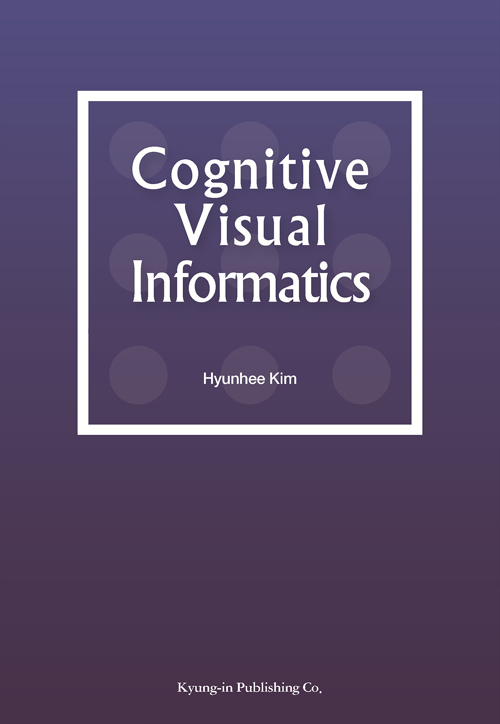
Cogntiive Visual Informatics
- 김현희 저
- 경인문화사
- 2018년 02월 28일
-
정가22,000원
-
판매가19,800원 [10% 할인]
-
결제 혜택무이자
카드할인/포인트결제 안내
제휴카드
반디앤루니스 롯데카드 결제금액 최대 25% 청구할인 (1만원 이상 결제건에 한해 월 2회, 건당 최대 1만원 할인) 반디앤루니스 우리V카드 결제금액 10% 청구할인 포인트결제
OK캐쉬백 포인트 최소 10원부터 전액 사용 or 1% 적립 현대카드 M포인트 결제금액의 최대 10% 사용 가능 신한카드 포인트 결제금액의 최대 10% 사용 가능(일부카드) 하나(구.외환) 포인트 보유 한도 내에서 100% 사용 가능 씨티카드 포인트 결제금액의 최대 50% 사용 가능 할인카드
NH농협 TAKE5카드 20% 청구할인(Edu Pack) 채움 플래티늄 멀티카드 20% 청구할인 모바일 Tmoney 신한카드 10% 청구할인 신한카드 Shopping 10% 청구할인 NH농협 체크카드 10% 청구할인 NH20 해봄 신용카드 10% 청구할인 씨티 클리어 카드 7% 청구할인 NH20 해봄 체크카드 5% 청구할인 NH농협 LADY다솜카드 5% 청구할인 신한카드 큐브 5% 청구할인 신한카드 큐브 PLATINUM# 5% 청구할인 
무이자 안내
-
적립금1,100원 적립 [5%P]
추가 적립금 안내
[2천원 추가 적립]
총 주문금액 5만원 이상 구매 시 2,000원 추가 적립
도서(eBook포함)만 구매 시 적립 대상에서 제외업채배송상품 포함(기프트, 업체배송 등) 5만원[멤버십 추가 적립]
슈퍼루니 : 3% 추가 적립
골드루니 : 2% 추가 적립
실버루니 : 1% 추가 적립
단, 국내도서, eBook만 구매 시 적립 불가
-
배송료무료배송
-
출고예정일
출고예정일 안내
※ 출고예정일은 도서 재고상황에 따라 변동될 수 있습니다.
2026년 11월 26일(목)※ 출고예정일은 도서 재고상황에 따라 변동될 수 있습니다.
당일배송 가능지역 검색
“도로명주소”를 쉽게 찾아보세요
1. 도로명으로 검색하기 (예, “직지길” or “직지길+322”)
2. 건물명으로 검색하기 (예, “반디앤루니스빌딩”)
3. 동(읍/면/리) 으로 검색 (예, “인사동” or “인사동+43”)
4. 도로명주소를 모르실 경우 도로명주소 안내시스템(http://www.juso.go.kr)에서 확인해주세요.
시/도
시/군/구
회원리뷰
ISBN: 9788949947266
288쪽
403g
152 x 223 (㎜)
지금 이책은
- 판매지수 : 0
이 분야의 베스트셀러
-
 사소해서 물어보지 못했지만 궁금했던 이야기
사물궁이 잡학지식
17,820원
-
 1분 과학
이재범, 최준석
18,000원
-
 바이러스 쇼크
최강석
13,500원
이 책이 속한 분야
- 자연과학/공학 > 교양과학/기술 일반 > 과학에세이
책 소개
출판사 리뷰
The book introduces theories and technologies that are applied to model and process visual information for this emerging field at the intersection of information science, library science, computer science, and cognitive neuroscience, which combines the research techniques of cognitive psychology with neuroscience techniques,such as electroencephalography/event-related potential (EEG/ERP), to assess the structure and function of the brain. With the rise of cognitive
neuroscience, many people with no previous experience in electrophysiology began setting up their own ERP labs. This was an important trend, because these researchers brought considerable expertise from other areas of science and began applying ERPs to a broader range of issues. I was fortunate to be involved in EEG/ERP projects, which were supported by the National Research Foundation of Korea. My goal in writing this book was to summarize research results on cognitive visual informatics that were obtained from the projects.
The book seems to be different from other information science books in terms of applying neuroscience, and cognitive science to information science field. The volume is organized so as first to explain basic concepts and then to illustrate them with examples and case studies. Hence, the book is useful for researchers, students, and practitioners of information science and its areas of application who want to know the new trends and applications in this field.
저자 소개

- 구분 : 저서
- 국적 : 대한민국
- 분류 : 기타
- 인기지수 : 0
Education and Career
1985~present. Professor at the Myongji University (South Korea)
2003. 8~2004. 7. Visiting scholar at the University of Michigan (USA)
1985. Ph.D. in information science, Case Western Reserve University (USA)
1979. Master's degree in library science, Sungkyunkwan University (South Korea)
Publications
Kim, H., & Kim, Y. (2016). Generic speech summarization of transcribed lecture videos: Using tags and their semantic relations. Journal of the Association for Information Science and Technology, 67(2), 366~379.
Kim, H. (2011). Toward video semantic search based on a structured folksonomy. Journal of the Association for Information Science and Technology, 62(3), 478~492.
Kim, H., & Kim, Y. (2010). Toward a conceptual framework of key?frame extraction and storyboard display for video summarization. Journal of the Association for Information Science and Technology, 61(5), 927~939.
목차
1. Introduction
2. Theories
2.1 Relevance
2.2 Theoretical Framework for Visual Information Recognition and Processing
2.2.1 Uni-modal
2.2.2 Multi-modal
2.3 Narrative Theory
3. Research Method: Focusing on NP Measures
3.1 EEG
3.2 fMRI
3.3 Eye Tracking
3.4 Understanding Topical Relevance Judgment in Visual Simple Search: An EEG Study
3.4.1 Introduction
3.4.2 Hypotheses
3.4.3 Experiments
3.4.4 EEG Recording and Processing
3.4.5 Results
4. Cognitive Models for Multimedia Comprehension
4.1 Baddeley’s WM
4.2 Mayer Model
4.3 Relevance Model
4.3.1 Simple Search Model
4.3.2 Complex Search Model
5. Metadata Framework for Efficient Browsing and Searching of Web Videos
5.1 Introduction
5.2 Multimedia Metadata: A Comparison of PB-Core, TVA, and MPEG-7
5.3 Related Studies
5.4 Structural and Semantic Metadata Framework
5.4.1 Theoretical Model
5.4.2 Metadata Framework
5.5 How to Obtain Metadata Information
5.6 Conclusion
6. Speech Summarization
6.1 Related Studies
6.1.1 Supervised Summarization
6.1.2 Unsupervised Summarization
6.1.3 Social Summarization
6.2 Social Summarization
6.2.1 Tag-based Framework
6.2.2 The Process of Generating Tag-based Summaries
6.3 Latent Semantic Analysis (LSA)
6.3.1 Overview
6.3.2 The Process of Generating LSA-based Summaries
6.4 Maximum Marginal Relevance (MMR)
6.4.1 MMR Model
6.4.2 The Process of Generating MMR-based Summaries
6.5 Acoustic Method
6.5.1 Overview
6.5.2 The Process of Generating Acoustic-based Summaries
7. Video Summarization
7.1 Overview
7.2 Related Studies
7.3 Algorithm for Key-frame Extraction
7.3.1 Two-step Approach to Key-frame Extraction
7.3.2 Example of Storyboard Construction
7.4 Video Summarization Using EEG/ERP Techniques
7.4.1 Overview
7.4.2 Theoretical Background
7.4.3 Research Hypotheses: Semantic Mismatch and Integration
7.4.4 Experimental Methodology
7.4.5 Results
8. Social Information Retrieval
8.1 Three Categories of Social Information Retrieval
8.1.1 Social Indexing
8.1.2 Social Search
8.1.3 Social Recommendation
8.2 Case Studies: Social Indexing and Search
8.2.1 Overview
8.2.2 Social Indexing of Videos
8.2.3 Social Search of Videos
9. Evaluation
9.1 Multimedia Retrieval: Approach and Performance Evaluation
9.2 The Evaluation of Social Summaries Created by the Social Summarization Method
9.2.1 Method
9.2.2 Results
9.2.3 Discussion
9.3 The Evaluation of EEG-based Key Shot Extraction Algorithm
9.3.1 Discriminant Analysis: Variable Selection and Evaluation
9.3.2 Intrinsic Evaluation
Index
배송 시 유의사항
- 반디앤루니스에서 구매하신 도서는 물류 대행 위탁업체 웅진 북센을 통해 배송됩니다.
(배송 포장에 "웅진 북센"으로 표기될 수 있습니다.)
- 구매한 상품의 품질과 배송 관련 문의는 반디앤루니스로 문의 바랍니다.
- 천재지변 및 택배사의 사정에 따라 배송이 지연될 수 있습니다.
- 결제(입금) 완료 후 출판사 및 유통사의 사정으로 품절 또는 절판 되어 상품 구입이 어려울 수 있습니다. (별도 안내 예정)
- 도서산간지역의 경우 추가 배송비가 발생될 수 있습니다.
반품/교환
상품 설명에 반품/ 교환 관련한 안내가 있는 경우 그 내용을 우선으로 합니다. (업체 사정에 따라 달라질 수 있습니다)
반품/교환
-
반품/교환 반품/교환 방법 홈 > 고객센터 > 자주찾는질문 “반품/교환/환불” 안내 참고 또는 1:1상담게시판 반품/교환 가능 기간 반품,교환은 배송완료 후 7일 이내, 상품의 결함 및 계약내용과 다를 경우 문제발견 후 30일 이내에 신청가능 반품/교환 비용 변심 혹은 구매착오의 경우에만 반송료 고객 부담(별도 지정 택배사 없음) 반품/교환 불가 사유 - 소비자의 책임 사유로 상품 등이 손실 또는 훼손된 경우
- 소비자의 사용, 포장 개봉에 의해 상품 등의 가치가 현저히 감소한 경우
- 복제가 가능한 상품 등의 포장을 훼손한 경우 : 예)만화책, 잡지, 화보집 등
- 시간의 경과에 의해 재판매가 곤란한 정도로 가치가 현저히 감소한 경우
- 전자상거래등에서의 소비자보호에 관한 법률이 정하는 소비자 청약철회 제한 내용에 해당되는 경우
- 해외주문 상품(해외 원서)의 경우(파본/훼손/오발송 상품을 제외)
소비자 피해보상
환불지연에 따른 배상- 상품의 불량에 의한 반품, 교환, A/S, 환불, 품질보증 및 피해보상 등에 관한 사항은
소비자 분쟁해결 기준(공정거래위원회고시)에 준하여 처리됨 - 대금 환불 및 환불지연에 따른 배상금 지급 조건, 절차 등은 전자상거래 등에서의
소비자 보호에 관한 법률에 따라 처리함
반품/교환 주소 경기도 파주시 문발로 77, 웅진북센(반디앤루니스)
